





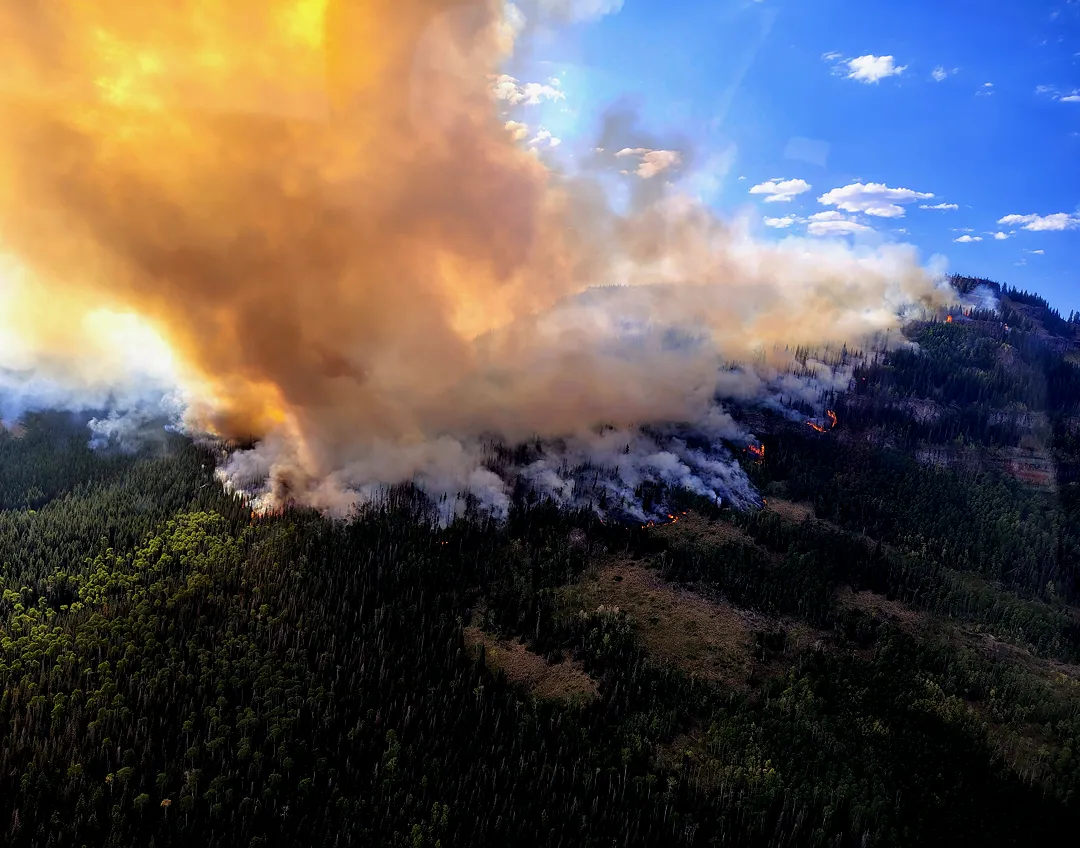
Wildfire season in Colorado arrives every year. But 2026 is different, and the data makes that clear.
Colorado’s snowpack hit its lowest level on record for early February since statewide measurements began in 1987, nearly four decades of monitoring. That snowpack likely peaked around March 9, roughly a month ahead of schedule. The mountains that normally hold moisture into late spring are already dry.
The Colorado Division of Fire Prevention and Control has described current conditions as a magnitude worse than those that preceded some of the state’s most destructive historic wildfires. Five wildfires had already burned approximately 15,000 acres in Colorado before the end of March, with the national total running at double the average for this time of year.
For homeowners in Boulder County, Longmont, and across the Front Range, this is not background noise. It is the context for every outdoor decision this spring, including the materials your deck is built from.
Why 2026 wildfire season in Colorado is already different
The numbers behind this year’s wildfire risk in Colorado are not projections. They are already showing up on the ground.
Colorado State Climatologist Russ Schumacher stated there is no clear point in the past where this combination of poor snowpack, extreme heat, and rapid early melting has all occurred together. Jennifer Kay, an atmospheric scientist at the University of Colorado Boulder, described the situation as putting the region in uncharted territory.
Early snowmelt lengthens the dry season in spring and summer, opening a longer window for wildfires. When snowpack melts earlier, landscapes dry out sooner and stay dry longer through the hottest months. Snowpack in parts of southern Colorado is sitting at approximately 35% of normal, with ground conditions described as very dry as the state enters the warm season.
For Boulder County homeowners, this means wildfire season in Colorado is not approaching. It has already started.
Why wildfire season in Colorado puts your deck at risk
During a wildfire, the direct flame is rarely what damages homes first. Embers and burning debris travel ahead of the fire line, sometimes covering distances of a mile or more, and they land on whatever surface they find. Decks, fences, and outdoor furniture are common landing points.
A deck built with standard wood framing and wood boards gives those embers something to work with. Wood ignites under sustained heat exposure, and once a deck catches, the fire has a direct path to the structure of the home itself.
In Boulder County, Longmont, Erie, and communities across the Front Range, wildfire risk is not a distant possibility. It is a documented, recurring reality that homeowners need to factor into every outdoor construction decision.
What fire rated materials actually do for your home
Fire rated materials are tested and classified based on how they respond to heat, flames, and burning debris. The classification does not mean a material is fireproof. It means the material is engineered to resist ignition, slow the spread of flame, and perform better under fire exposure than untreated alternatives.
For decks, this distinction matters in a very practical way. A custom deck built with fire rated composite decking gives embers less to ignite and more time for homeowners and emergency responders to act.
TimberTech and Trex both offer composite decking products with Class A or Class B fire ratings, the highest classifications available for building materials. These products are also engineered for the Colorado climate: they resist moisture, hold up through freeze-thaw cycles, and require significantly less maintenance than wood over the life of the deck.
Choosing fire rated composite decking is not a guarantee against wildfire damage. But it is a smarter, more resilient choice for any Colorado homeowner building or upgrading an outdoor space.
How to make your deck more resilient this wildfire season
Beyond material choice, there are specific decisions that make an outdoor structure more resistant to wildfire exposure. Here is what matters most:
Choose fire rated composite decking — products with Class A or B fire ratings from certified manufacturers perform better under ember exposure than standard wood boards.
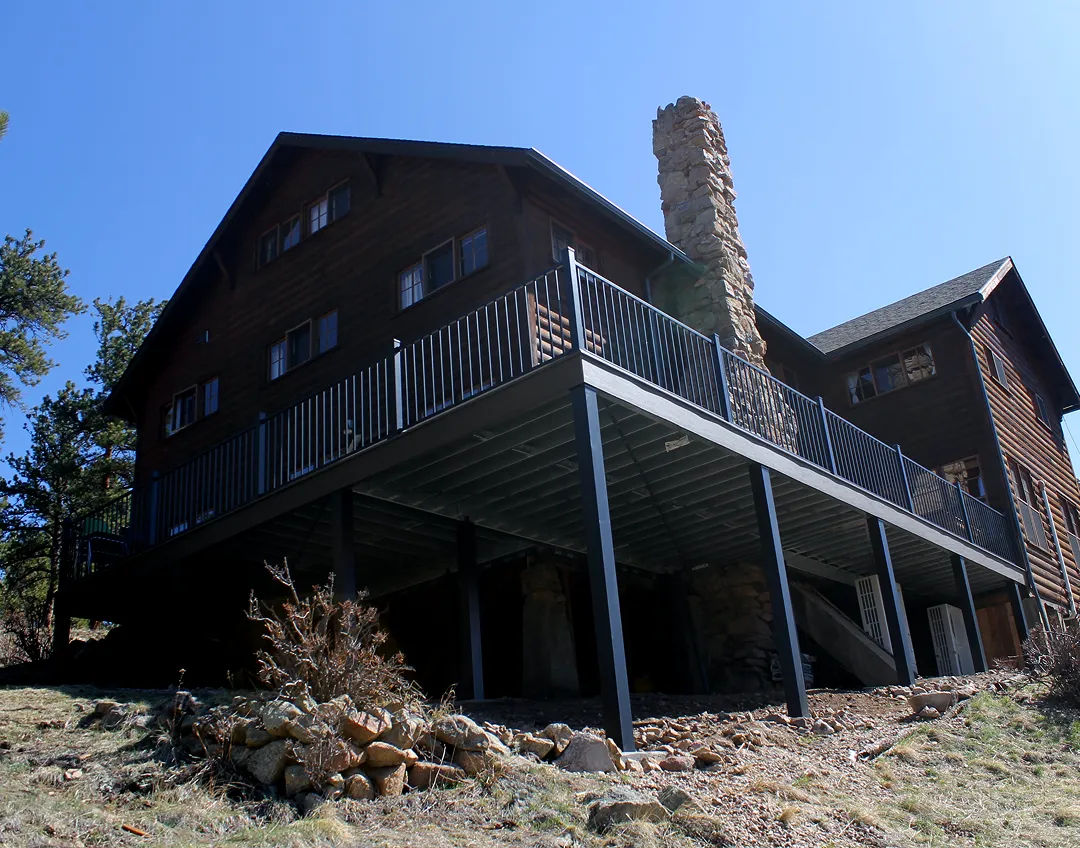
Use steel framing as the structural base — steel does not ignite the way wood does. A TimberTech composite deck built on a steel frame is structurally more resilient than a wood-framed alternative.
Minimize debris accumulation — keep the area under and around the deck clear of dry leaves, branches, and organic material that embers can ignite.
Create separation from vegetation — maintain a clear zone between the deck edge and any trees, shrubs, or dry grass in the yard.
Review your deck’s current condition — gaps, cracks, and deteriorating boards create spaces where embers can collect and smolder.
These steps do not eliminate wildfire risk. They reduce it in meaningful, practical ways that align with how Colorado fire safety specialists approach home preparedness.
What we learned at the Surviving Wildfires show in Longmont
On April 4th, Decks by Caio was on the floor at the Surviving Wildfires Home Preparedness Show at Barn A, Boulder County Fairgrounds in Longmont. The event ran from 8:00 AM to 4:00 PM and drew hundreds of Boulder County homeowners who came with one shared goal: leaving with a real plan to protect their homes before wildfire season peaks.
The room brought together over 40 vendors across every category that matters for home hardening, including roofing, ember-resistant vents, defensible space services, water and suppression systems, and insurance specialists. Fire districts, county agencies, Xcel Energy, and Longmont Fire Department were all present. Decks by Caio participated as part of the home hardening and retrofit category, alongside contractors focused on the full exterior envelope of the home.
What stood out was the quality of the conversations. These were not casual browsers. They were homeowners actively thinking about defensible space, material choices, and what a wildfire scenario would actually mean for their property. Many had never connected their outdoor construction decisions to their wildfire preparedness plan. They thought about evacuation routes and emergency kits. They had not thought about what their deck was made of.
That gap is exactly where Decks by Caio operates. Building well and building safely are the same decision. Being part of that conversation in the community, alongside the fire districts and agencies who live this work every day, reinforces everything we already build around.
Start the season with the right structure
Wildfire season in Colorado is not something homeowners can fully control. But the materials and structure of your outdoor space are decisions entirely within your reach, and they are decisions that matter.
At Decks by Caio, we build custom decks across Boulder, Longmont, and the surrounding communities with fire rated materials, steel framing, and a commitment to structures that perform in the Colorado climate for the long term.
We build your dream.
Get your free estimate and let’s build an outdoor space that is ready for every Colorado season.
 Call us (303) 808-2988