


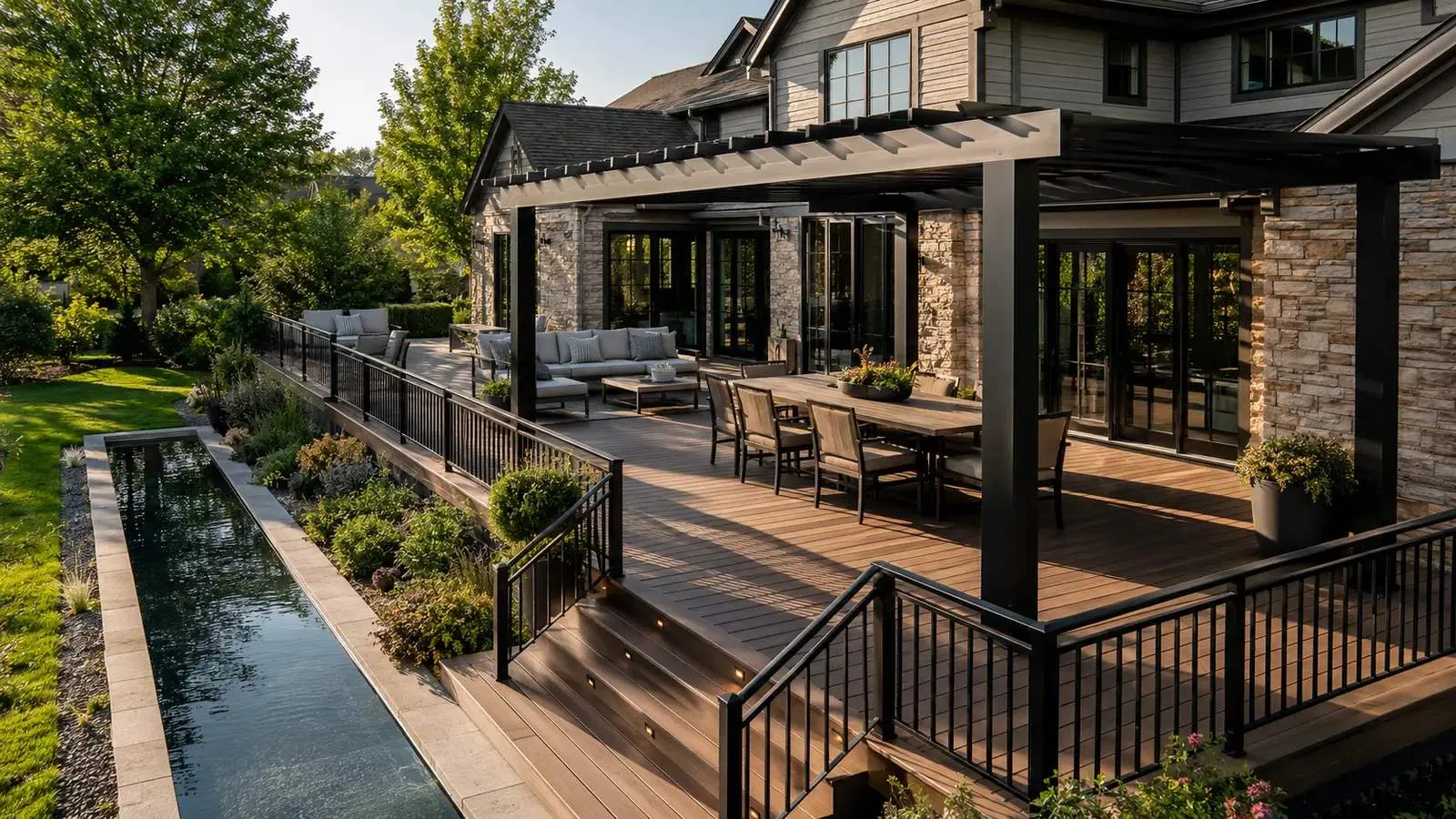
Pergolas work well in Colorado summers because they shade the parts of a deck people actually use, like seating, dining, and outdoor kitchen areas, without closing in the backyard. Air, daylight, and views stay open, and a design planned around sun direction adds more comfortable hours outside on hot afternoons.
Pergolas for Colorado summers solve a practical problem: direct afternoon sun can leave a beautiful deck unused. See how shade can be planned as part of Decks by Caio’s custom deck solutions without closing off the backyard.
Why shade changes how a backyard is used
Colorado summer heat often peaks when families want to dine, relax, or entertain outside. A pergola places targeted shade over the zones that need it most, helping the deck remain comfortable without becoming an enclosed room.
Comfort without losing the open-air experience
Unlike a solid roof, a pergola can preserve airflow, daylight, and views while reducing direct exposure above seating, dining, or cooking areas. The result is not simply more shade, but more usable hours outdoors. Explore Decks by Caio’s custom pergola services.
Orientation matters more than size
The largest structure is not always the most effective. Sun direction, the home’s position, deck layout, and time of use should determine coverage. West-facing areas may need stronger late-day protection, while adjustable louvers offer greater control as conditions change.
A structure that organizes the space
A pergola creates a focal point and defines an outdoor room. Posts, lighting, furniture, and circulation should be coordinated early so shade supports movement instead of interrupting it. Learn why pergola and deck design works better when planned together.
What makes a pergola work for Colorado summers?
The strongest design balances targeted shade, open-air comfort, proportion, and climate-aware placement. See completed outdoor projects in the project gallery. When every element is planned as one composition, the pergola feels integrated—not added later.
Before you build, plan these five points:
Sun path: note where the afternoon sun hits the deck, especially on west-facing areas.
Coverage zones: shade the spots you use most, such as the dining table, lounge seating, or grill.
Roof style: fixed slats give steady filtered shade; adjustable louvers let you open or close the roof as conditions change.
Structure and materials: choose posts, beams, and finishes that hold up to intense sun, wind, and winter snow.
Layout and lighting: place posts, lighting, and walkways so the pergola frames the space without blocking movement.
Frequently Asked Questions
Does a pergola provide full shade?
No. A traditional pergola filters sunlight rather than blocking it completely. The amount of shade depends on slat spacing, orientation, and roof style, and adjustable louvers or a shade cover add more protection on the hottest days.
Can a pergola be added to an existing deck?
Often, yes. The deck framing needs to support the pergola's posts and loads, so the existing structure should be evaluated before building.
Do I need a permit to build a pergola in Colorado?
It depends on your city and HOA. Requirements vary across Colorado communities, so check local building rules and HOA guidelines before construction begins.
What is the difference between a pergola and a covered patio?
A pergola has an open or slatted roof that filters sun while keeping airflow and daylight. A covered patio has a solid roof that blocks sun and rain completely, but the space feels more enclosed.
Ready to create a summer-ready outdoor space?
Explore Decks by Caio’s custom deck solutions and request a free estimate. For more Colorado outdoor living guidance, visit the blog.
 Call us (303) 808-2988