





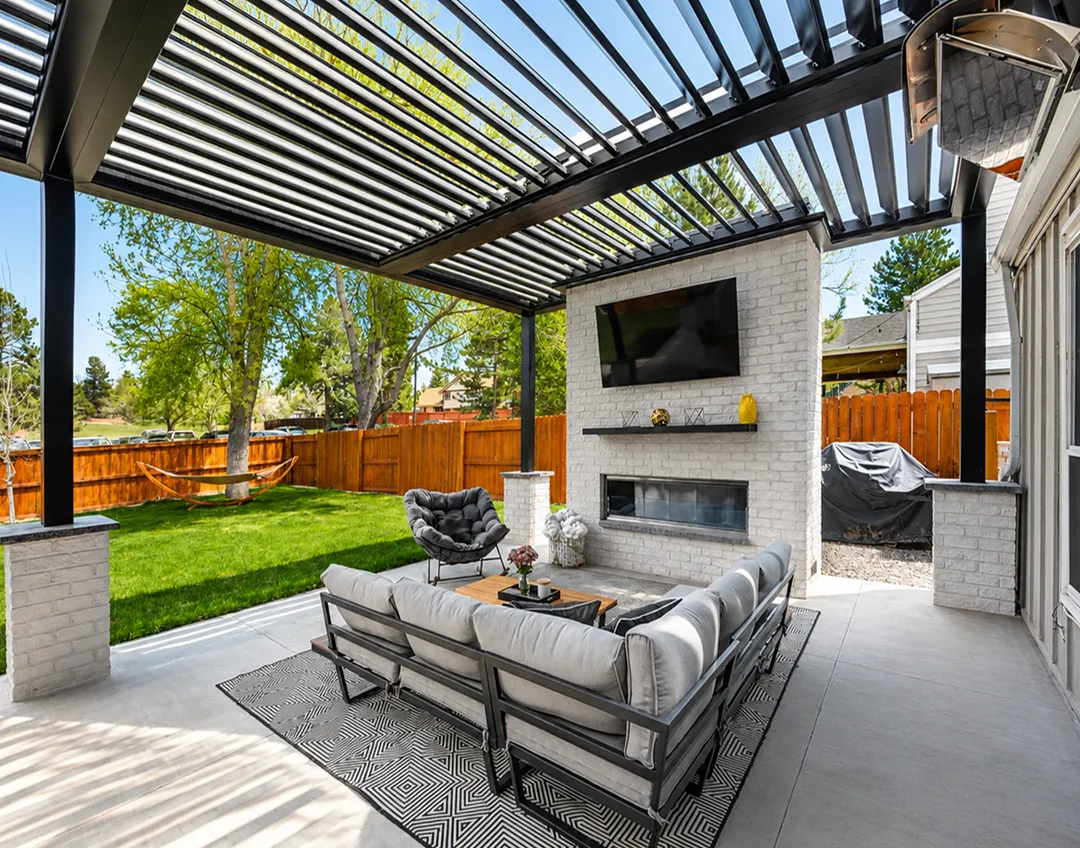
Pergola and deck design in Colorado is changing. In 2026, homeowners in Boulder, Longmont, and across the Front Range are no longer thinking about decks and pergolas as separate decisions. They plan them together from the start. The results consistently outperform projects where the pergola came as an afterthought.
According to the 2026 Outdoor Living Trend Report, 77% of U.S. homeowners wish they spent more time outside, and nearly 60% plan to invest in their outdoor spaces this year. The question most Colorado homeowners are now asking is not whether to add a pergola. It is why they would ever plan it separately from the deck in the first place.
Why pergola and deck design is changing in Colorado
The way outdoor spaces are designed has shifted significantly heading into 2026. Decks are no longer standalone surfaces. They are the foundation of outdoor rooms, and a pergola is the structure that completes that room.
In Colorado, this shift is especially relevant. Summers bring intense afternoon sun and unpredictable rain. A pergola built with adjustable aluminum louvers gives homeowners full control over sunlight, shade, airflow, and rain protection at any time of day. With motorized louver systems that rotate up to 140 degrees, the outdoor space becomes fully usable from spring through fall regardless of the weather. However, the structural and aesthetic benefits of that system only fully materialize when the pergola and deck start as one integrated project.
What happens when the pergola comes after the deck
Adding a pergola after the deck is already built is one of the most common and avoidable mistakes in outdoor construction. In practice, it creates three distinct problems.
The first is structural. A deck built without a pergola in mind may lack the engineering to support the additional load. Aluminum louvered pergolas carry more weight than traditional open-beam structures. The framing beneath the deck needs to account for that from the beginning. Retrofitting to carry that load after the fact adds cost and complexity that integrated planning eliminates entirely.
Layout is the second problem. A custom deck designed around a pergola positions posts, beams, and coverage where the space actually needs them. When the pergola comes later, post placement depends on what the existing structure allows. The homeowner’s preferences take second place to what is structurally feasible.
Visual coherence is the third. Pergola and deck design that starts as one project uses materials, finishes, and proportions chosen to work together intentionally. A pergola added to an existing deck frequently reads as exactly that, an addition, rather than an original part of the design.
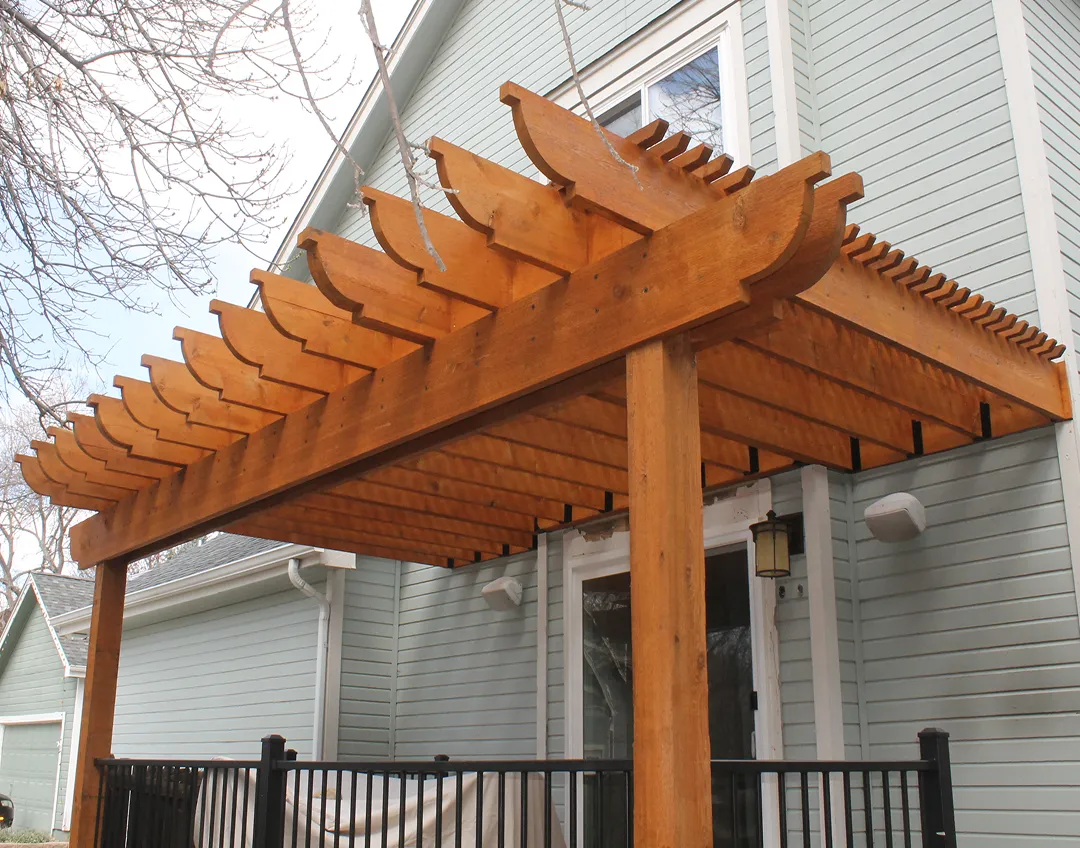
The louvered pergola as Colorado’s all-season outdoor room
The louvered aluminum pergola has become the defining structure in premium outdoor living for 2026. Unlike traditional open-beam pergolas that offer partial shade and no weather protection, louvered systems give homeowners active control over their environment.
In Colorado, that control matters. July afternoons in Boulder can shift from clear skies to a thunderstorm within an hour. With motorized louver panels, the space closes in seconds and stays dry without interrupting the gathering. Rain sensors on higher-end systems handle that automatically before the first drop falls. When the sun returns, the louvers open to whatever angle delivers the right balance of light and shade for the time of day.
Aluminum construction also aligns directly with what Colorado weather demands. It resists UV exposure, holds up through freeze-thaw cycles, and requires minimal maintenance over decades of use. In 2026, installed pricing for a 200 square foot aluminum louvered pergola in the Denver area ranges from $95 to $140 per square foot, making it one of the highest-value additions to a Colorado outdoor space when planned as part of a complete project from day one.
How pergola and deck design together changes the result
When pergola and deck design starts as a single integrated project, every decision made for one element improves the other. The deck layout takes shape around how the pergola will cover and frame the space. The framing carries the full structural load from the beginning. The team selects materials to work together visually and perform consistently through Colorado seasons.
Because everything moves through design, permitting, and construction on one timeline, the process runs more efficiently. One contractor, one permit process, one project. As a result, the total cost of building both together is consistently lower than building the deck first and adding the pergola later.
For homeowners in Boulder, Longmont, Louisville, and Lafayette who want a finished outdoor room rather than a deck with a cover bolted on top, therefore, the planning conversation needs to include both structures from the very first meeting.
Ready to design your deck and pergola as one complete outdoor space? Get a free estimate today.
Build the outdoor room once. Build it right.
The outdoor spaces that Boulder and Longmont homeowners love most feel intentional from every angle. A deck that was always going to have a pergola looks entirely different from one that had a pergola added to it later. That difference starts in the planning, not the construction.
At Decks by Caio, we design and build custom decks, pergolas, and complete outdoor living spaces across Boulder, Longmont, and the surrounding communities. Every project starts with a conversation about the full vision, not just the first phase.
We build your dream.
Get your free estimate and let’s design your complete outdoor space from day one.
 Call us (303) 808-2988