





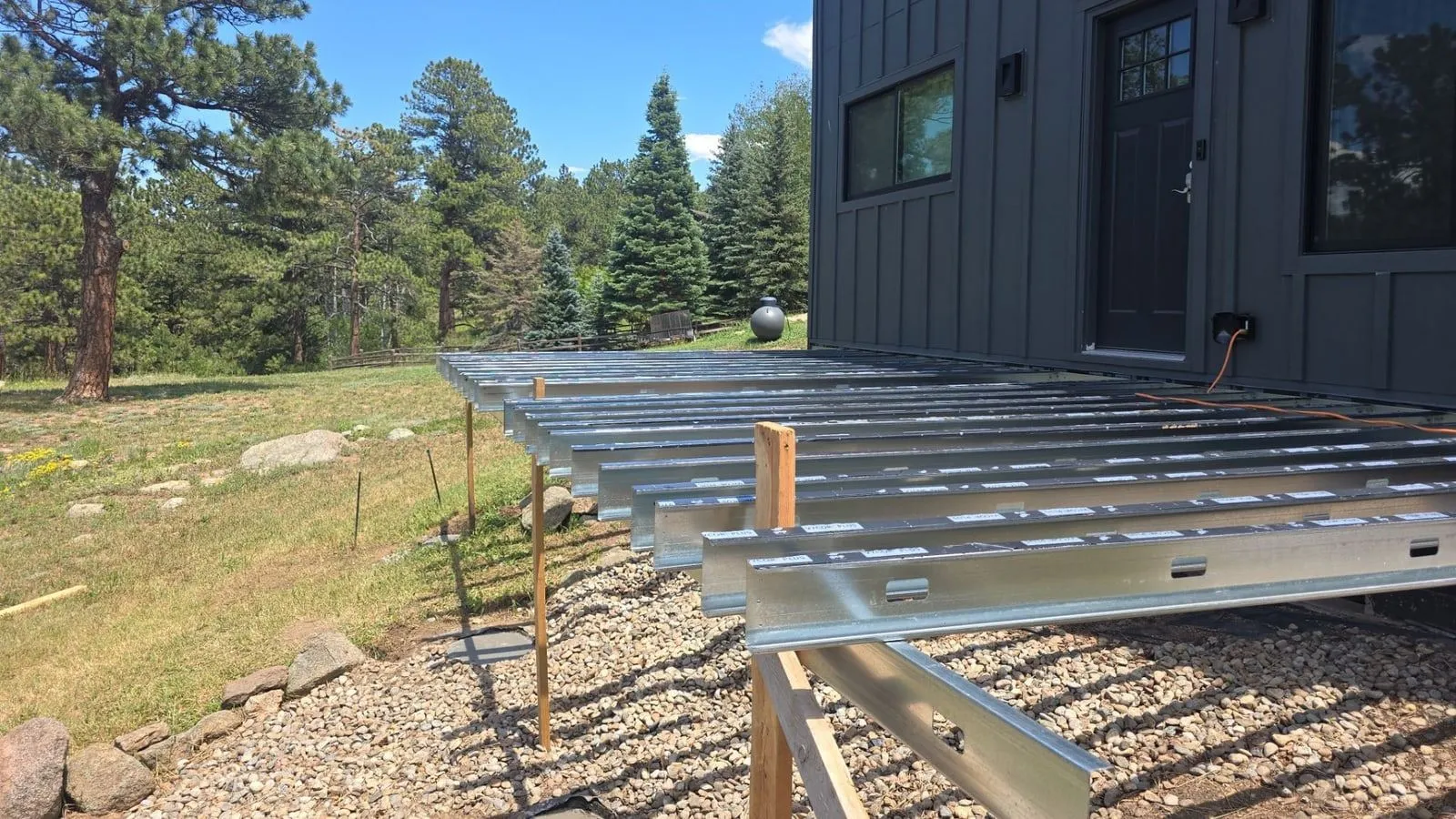
Your deck substructure, the posts, beams, and joists under the boards, decides how flat, safe, and long-lasting your deck will be. Wood costs less up front. Galvanized steel and TimberTech aluminum don’t rot or warp and carry more load with less material. Explore our custom deck solutions.
What is a deck substructure?
The deck substructure is everything that holds the deck up: footings, posts, beams, joists, and the ledger that connects the deck to the house. You walk on the boards, but the substructure carries the weight of people, furniture, grills, and snow. Boards can be replaced; replacing the frame means rebuilding the deck.
This guide compares the three most common options, wood, galvanized steel, and TimberTech aluminum, on the points that matter most in Colorado. If your main question is lifespan, read our article on steel vs. wood deck framing and which lasts longer.
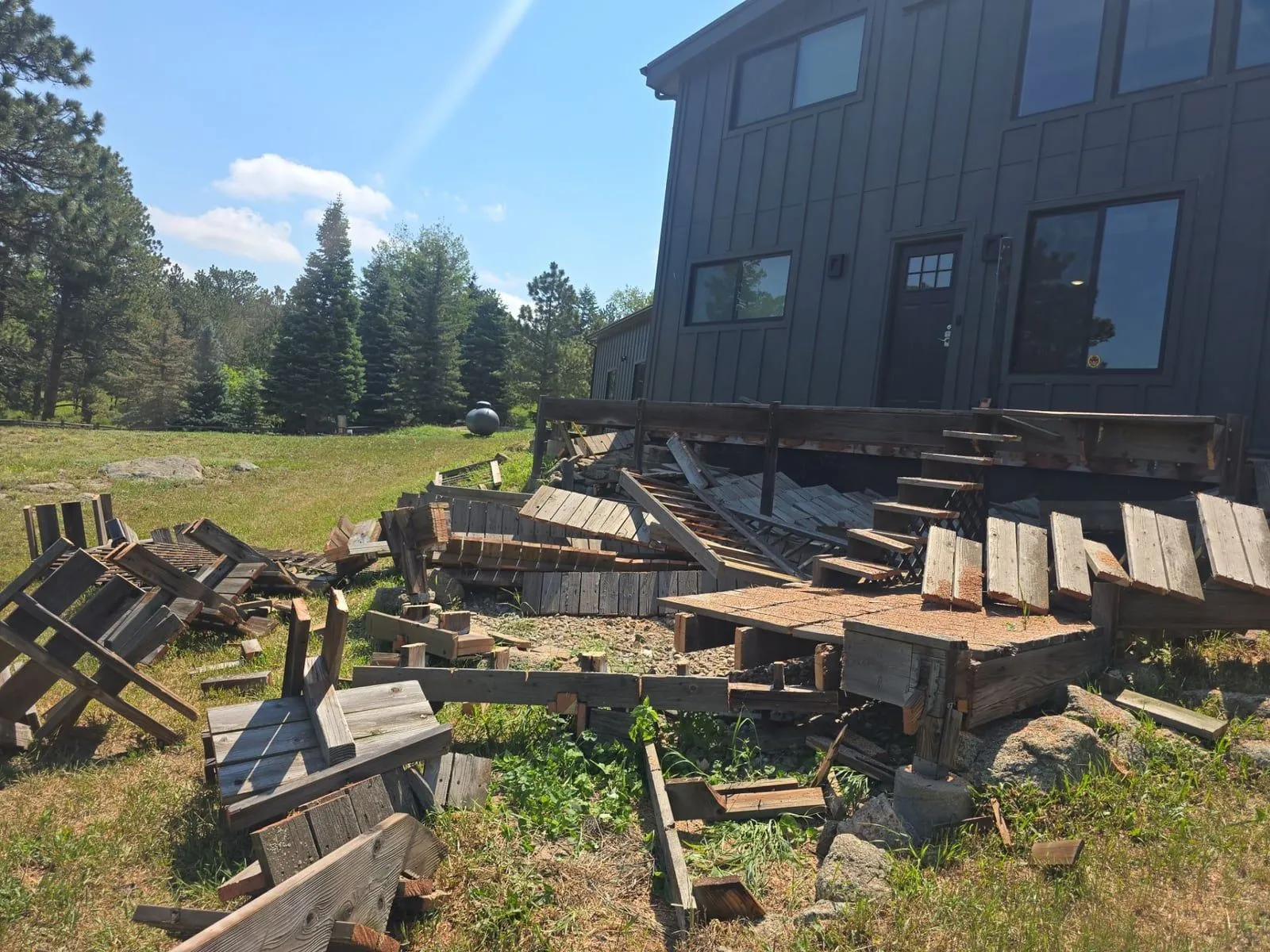
Steel vs. wood deck substructure at a glance
Here is how the three materials compare, side by side:
| Feature | Wood | Galvanized steel | TimberTech aluminum |
|---|---|---|---|
| Moisture | Absorbs water and swells | Does not absorb water | Does not absorb water |
| Rot and insects | Needs treatment and can still decay | No rot or insect damage | No rot or insect damage |
| Flatness over time | Can twist, crown, or shrink | Stays straight | Stays straight |
| Fire | Combustible | Does not burn | Class A flame spread rating |
| Weight | Moderately heavy | Heavy | Lightweight |
| Upfront cost | Lowest | Higher | Higher |
How each substructure handles Colorado snow loads
Snow is the heaviest load most Front Range decks carry, and it grows with elevation. In neighboring Larimer County, the building department’s design criteria allow residential construction to follow the code’s prescriptive rules only where the ground snow load does not exceed 70 pounds per square foot. Above that, the structure needs an engineered design. Boulder County and each city set their own values, so the load is confirmed with the permit.
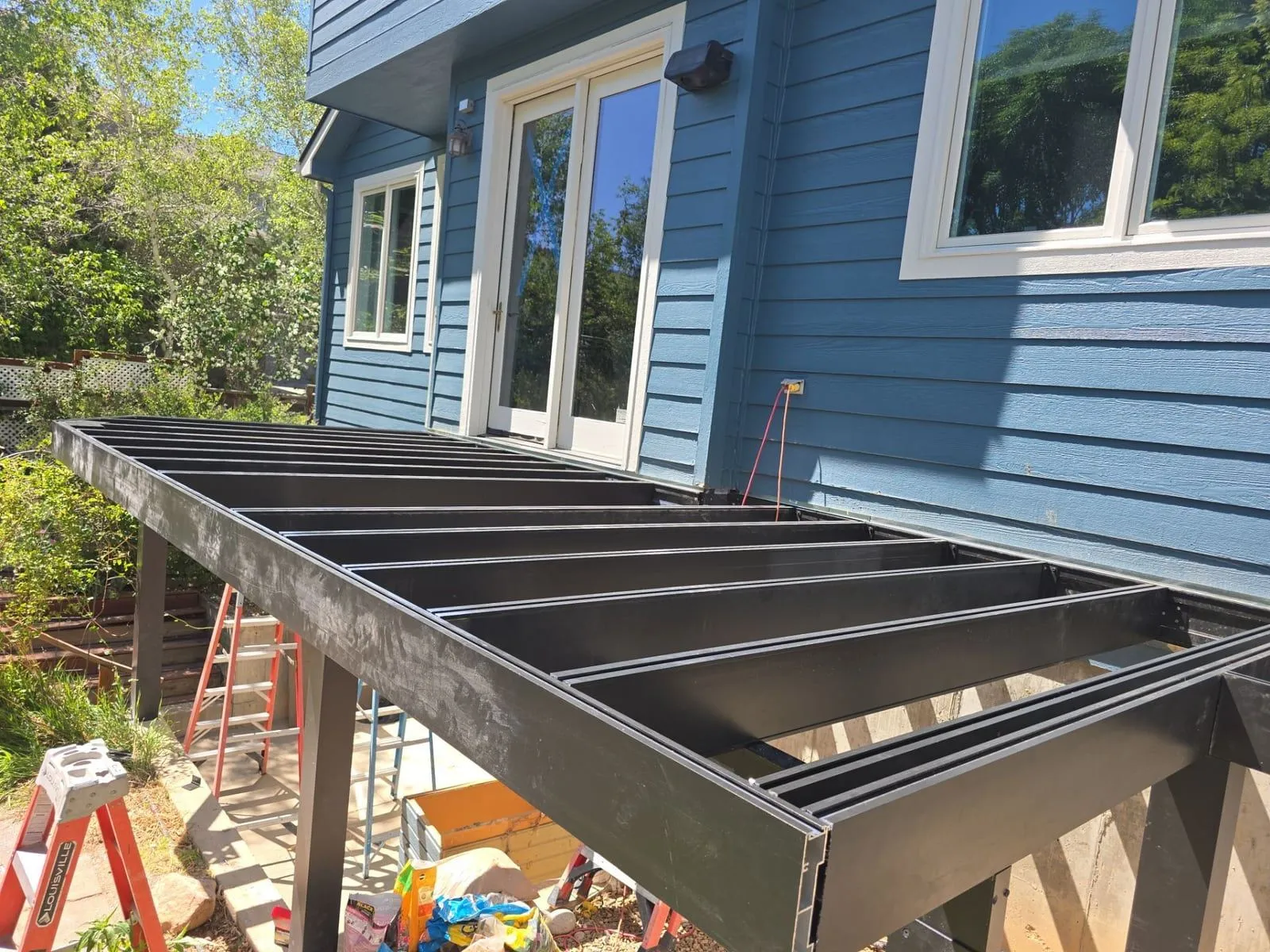
With wood, a heavier load means deeper joists, tighter spacing, or more beams and posts. Metal framing reaches the same strength with smaller members: according to TimberTech, a 2×8 aluminum joist is similar in strength to a 2×12 wood joist. That means more clearance under the deck and fewer posts in the yard, which matters on upper-level decks.
Moisture, rot, and insects
Wood takes in and releases water. According to a study by USDA Forest Products Laboratory researchers, it can swell about 10% across the grain from dry to wet. Repeated cycles of snowmelt and dry Colorado sun open checks and splits, loosen fasteners, and give decay a place to start.
Metal does not go through that cycle. The zinc coating on galvanized steel corrodes at roughly 1/30 the rate of bare steel, according to the American Galvanizers Association, and TimberTech describes its aluminum framing as highly resistant to rust, corrosion, and mold. Neither one gives rot or insects anything to feed on.
Flatness and the finished deck surface
A frame that moves shows up on top. When wood joists crown or twist, the boards follow, screws can back out, and the surface stops looking even. TimberTech says its aluminum framing starts flat and stays flat when installed to its guidelines, and galvanized steel joists arrive straight from the factory. A flat frame is what lets hidden fasteners and long composite boards look clean, as on our TimberTech decks.
Fire safety and Colorado’s wildfire code
The 2025 Colorado Wildfire Resiliency Code is a state minimum code for new construction, significant exterior alterations, and additions in the wildland-urban interface. Mesa County, for example, began enforcing it on July 1, 2026, and projects in those areas that include a deck may need a review or permit. Requirements depend on the hazard zone, so your local building department has the final word.
The frame is part of the answer. Steel does not burn, and TimberTech aluminum framing carries a Class A flame spread rating, the highest available. Wood framing is fuel. For more ways to protect your outdoor space, read about wildfire season in Colorado and how to protect your deck.
Cost: upfront price vs. long-term value
Wood is the least expensive substructure to build. Metal framing costs more up front, and in return the investment goes into a structure that does not rot, warp, or feed insects under the boards. TimberTech backs its aluminum framing with a lifetime limited warranty on major components. For price ranges by deck type, see how much a custom deck costs in Colorado.
Which deck substructure is right for your project?
Wood can make sense for a small, low deck on a tight budget, where snow loads are moderate.
Galvanized steel is a strong fit for large decks, long spans, and upper-level decks that carry heavy snow.
TimberTech aluminum suits projects where light weight, a slim profile, or a black frame that blends in under the deck matters.
Decks by Caio builds with galvanized steel and TimberTech aluminum framing all year, including winter, and sizes every substructure for the site’s snow load and permit.
Build your deck on the right substructure
The boards are what you see, but the substructure is what you live with for decades. Request a free estimate and we’ll recommend the frame that fits your home, your yard, and Colorado’s weather.
Deck substructure FAQ
What is a deck substructure?
It is the frame that holds the deck up: footings, posts, beams, joists, and the ledger attached to the house. The deck boards sit on top of it. The substructure carries every load, from people and furniture to snow.
Is steel deck framing stronger than wood?
Metal framing reaches the same strength with smaller members. TimberTech, for example, says its 2×8 aluminum joist is similar in strength to a 2×12 wood joist. That allows longer spans and fewer posts, and every frame is still sized for the local snow load.
Does Colorado’s wildfire code affect my deck?
It can. The 2025 Colorado Wildfire Resiliency Code covers new construction, significant exterior alterations, and additions in wildland-urban interface areas, and projects there that include a deck may need a review or permit. Your local building department confirms what applies to your address.
Is metal deck framing worth the higher cost?
For most Colorado decks, yes. A galvanized steel or TimberTech aluminum frame does not absorb water, rot, or warp, so the deck stays flat and the boards stay secure for years. Wood still fits small, low decks where budget comes first.
 Call us (303) 808-2988