





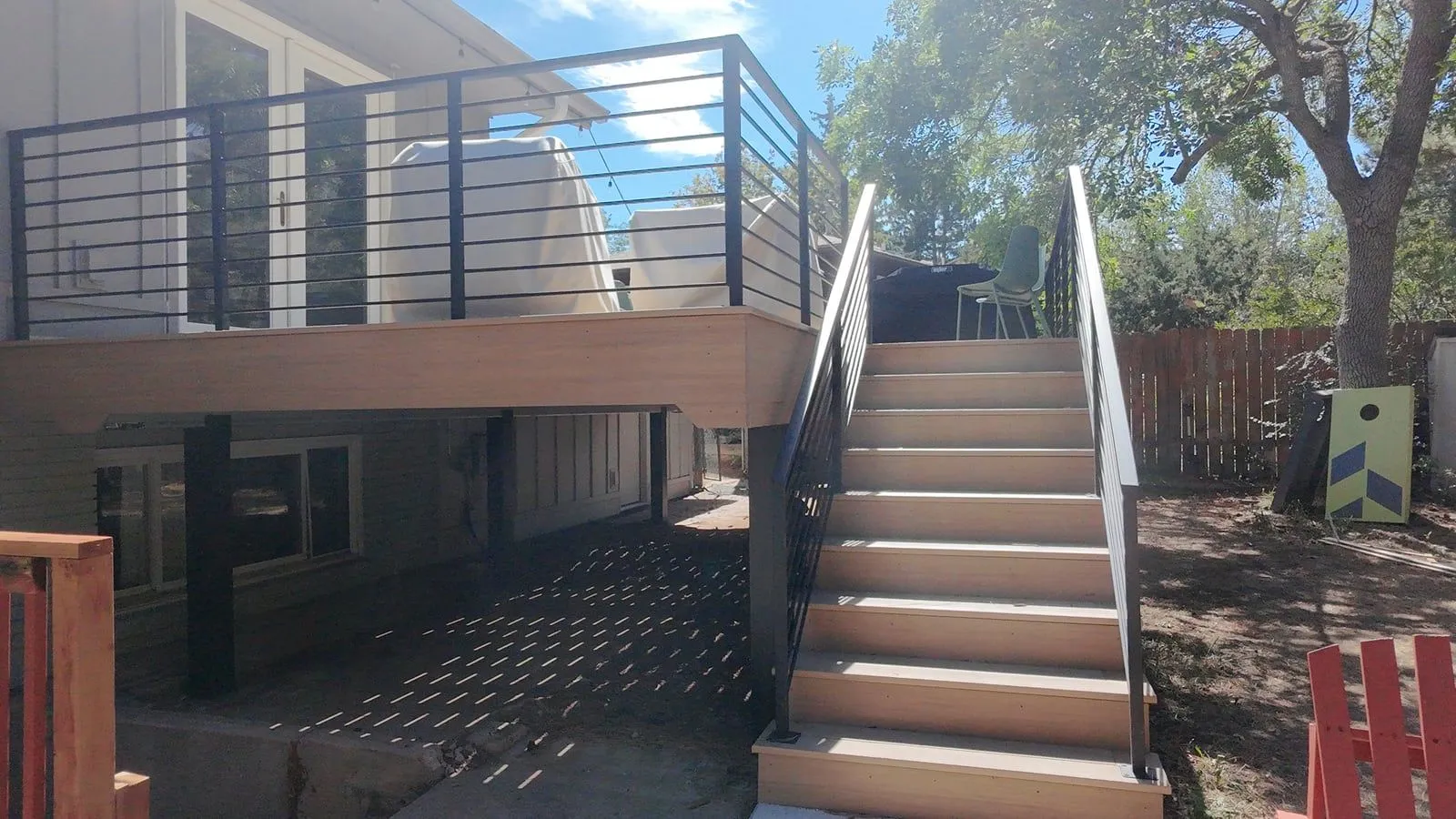
How does composite decking in winter hold up in Colorado? Very well: capped composite boards and metal framing do not absorb water, rot, or warp the way wood can, so they handle snow and freeze-thaw cycles. Explore Decks by Caio’s custom deck solutions.
What Colorado winters do to a deck
Front Range winters bring snow followed by sunny days that melt it, so a deck goes through repeated cycles of wetting, freezing, and drying. Materials that soak up water feel those cycles the most. Wood is hygroscopic: according to the USDA Forest Products Laboratory, it can swell about 10% across the grain from dry to wet, then shrink again as it dries. Over many seasons, that movement loosens fasteners, opens checks and splits, and invites rot.
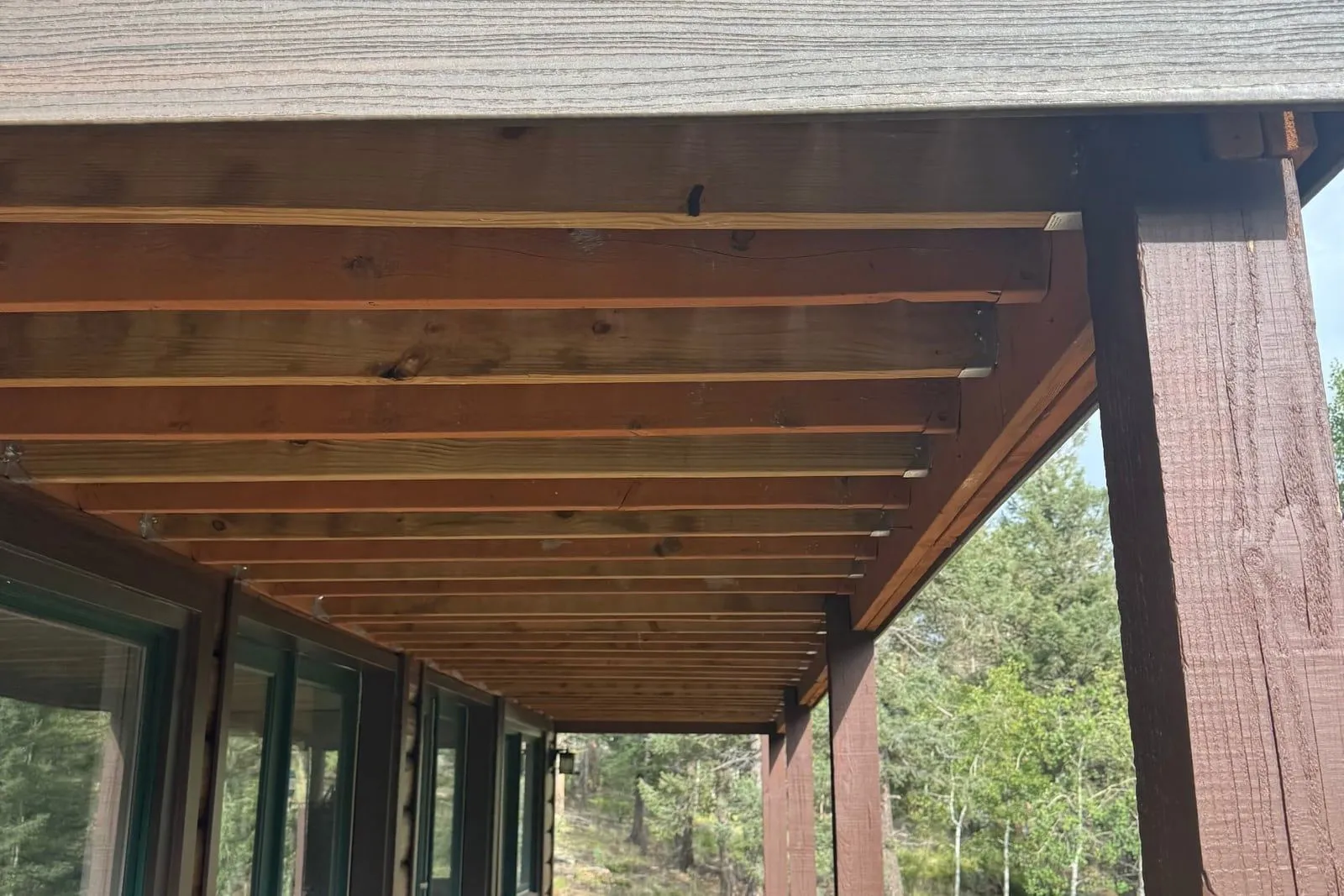
Composite decking in winter: how it performs in Colorado
Composite boards are built to sidestep the moisture problem that wears down wood. For the basics of the material, see what composite decking is.
A protective cap keeps water out
Modern capped composite is wrapped in a polymer shell with no organic material. TimberTech explains that the cap helps protect the board against moisture, stains, and fading, so melting snow beads up and drains instead of soaking in.
No sealing, sanding, or splinters
Because composite does not absorb water the way lumber does, it does not need a fresh coat of sealer before winter, and it does not splinter as it ages. That makes it a strong fit for a climate that swings between snowstorms and bright, dry afternoons. Explore Decks by Caio’s TimberTech deck options.
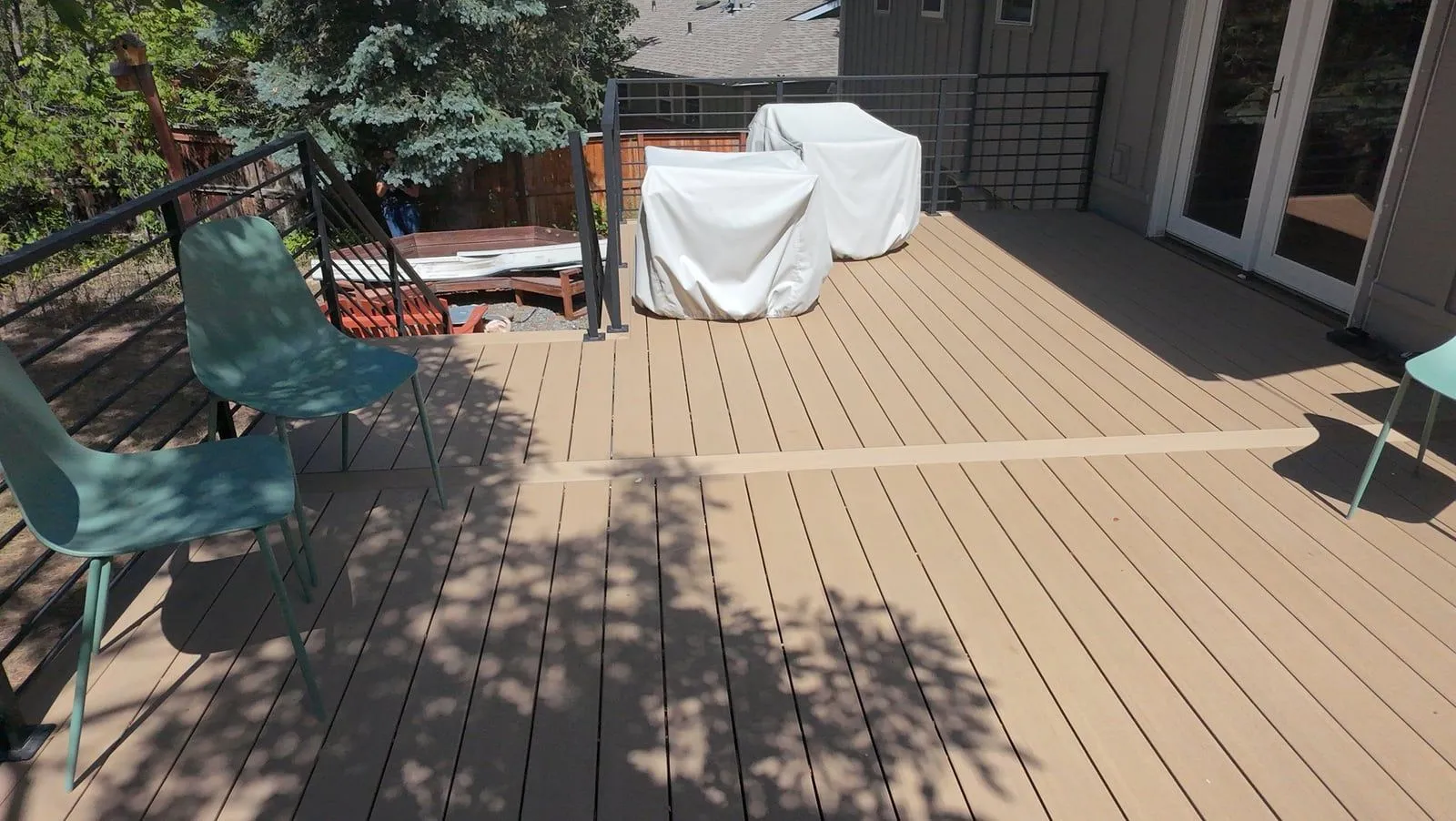
How steel and aluminum framing handle freeze-thaw cycles
The frame is hidden, but it carries the whole deck, so pairing composite boards with metal framing completes a winter-ready build. Decks by Caio builds with two metal options. Galvanized steel is protected by a zinc coating that, according to the American Galvanizers Association, corrodes at roughly 1/30 the rate of bare steel. TimberTech aluminum framing is highly resistant to rust, corrosion, and mold, with a Lifetime Limited Warranty on major components. Neither absorbs water, so the frame does not swell, rot, or twist, and the deck surface stays flat from season to season:
| Feature | Wood | Galvanized steel | TimberTech aluminum |
|---|---|---|---|
| Absorbs water | Yes, and swells as it does | No | No |
| Rot and insects | Vulnerable over time | Does not rot | Does not rot |
| Stays flat through the seasons | Can twist, cup, or warp | Yes | Yes |
| Corrosion protection | Not applicable | Zinc coating | Naturally corrosion resistant |
For a full look at framing durability, read our guide to steel vs. wood deck framing.
Winter care tips for a composite deck
A little care keeps a composite deck looking its best through the season. TimberTech’s care guide recommends:
Clear snow with an all-plastic shovel; metal edges can scratch the surface.
Use an ice melt with calcium chloride and avoid rock salt or abrasive products.
Rinse off any white residue from ice melt once conditions allow.
Keep board gaps and drainage paths clear so meltwater runs off.
For more seasonal advice, see these winter deck care tips.
Building in winter
Winter is not a reason to wait. Founded by Wagner Ribeiro in 2010, Decks by Caio is a family-owned builder on Colorado’s Front Range that builds year-round, including throughout the winter, so a composite deck with metal framing can be built now and be ready to enjoy before spring arrives.
Build a deck made for Colorado winters
Explore Decks by Caio’s custom deck solutions and TimberTech deck options in Boulder and Longmont, then request a free estimate for a composite deck with metal framing designed for every season.
Composite decking in winter FAQ
Does composite decking crack in freezing weather?
Capped composite is designed to resist moisture, the main driver of freeze-thaw damage, so it holds up well in Colorado winters. Boards expand and contract slightly with temperature, which experienced installers account for.
Can I use ice melt on a composite deck?
Yes. TimberTech notes that most ice melt products with calcium chloride can be used without damaging the surface. Avoid rock salt and abrasive products, and rinse off any residue when conditions allow.
Is composite decking slippery in winter?
Any deck surface can get slippery when snow or ice builds up, so TimberTech advises caution in freezing weather. Clearing snow promptly with an all-plastic shovel and using a calcium chloride ice melt keeps a composite deck safer to walk on.
Is steel deck framing good for snow and moisture?
Yes. Galvanized steel and TimberTech aluminum framing do not absorb water, rot, or warp, so the frame stays straight and the deck stays flat through freeze-thaw cycles.
Can you build a deck in winter in Colorado?
Yes. Decks by Caio builds decks year-round, including throughout the winter, so homeowners can have their new deck ready before spring.
 Call us (303) 808-2988