





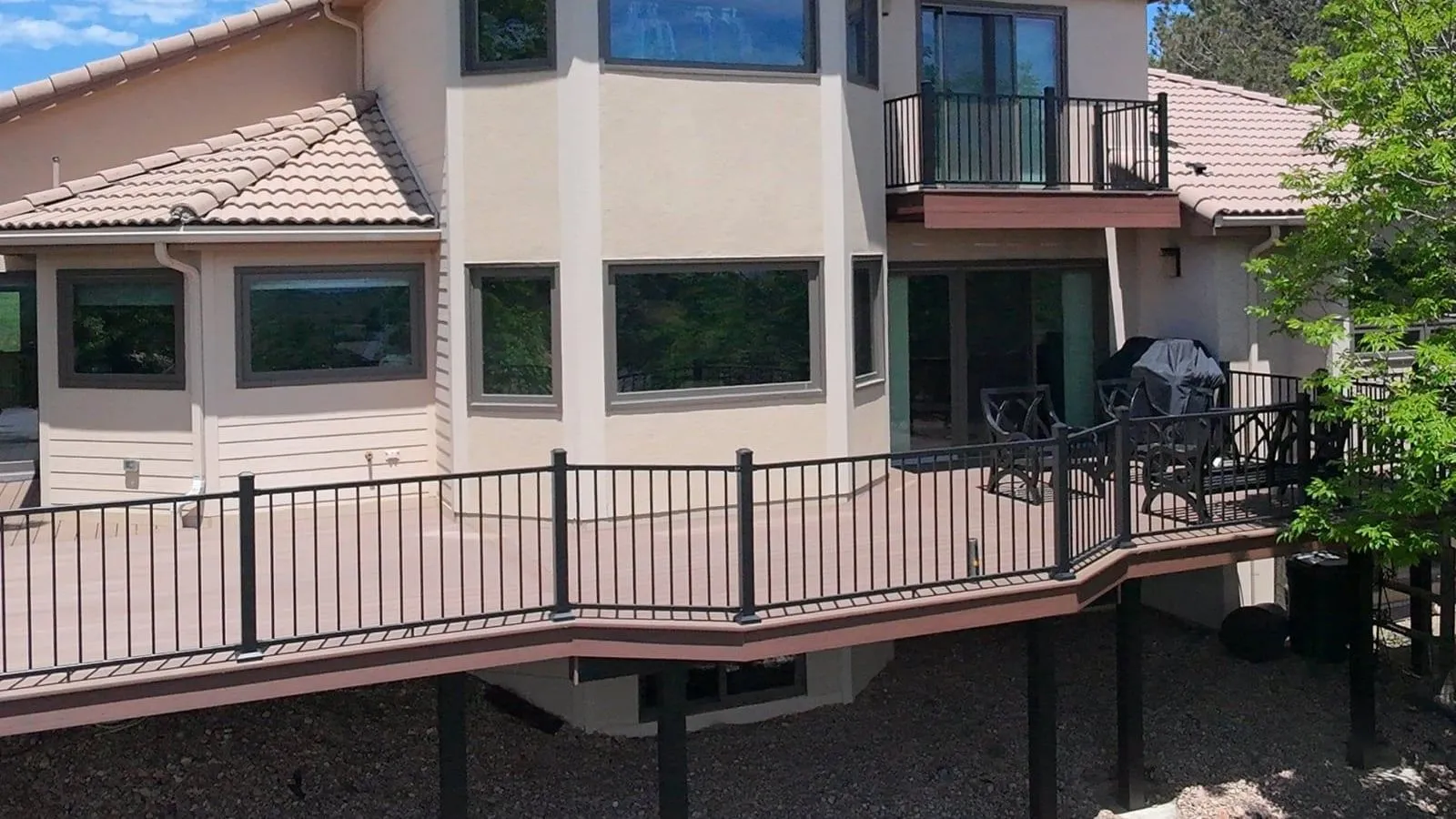
What is composite decking? It is a deck board made from wood fibers and plastic, usually wrapped in a protective polymer cap. That mix resists rot, moisture, and fading, which helps it last longer in Colorado. Explore Decks by Caio’s custom deck solutions.
What is composite decking made of?
Composite boards combine a core of wood fibers and plastic with an outer protective layer. In TimberTech composite, a board can contain up to 85% recycled content, including reclaimed wood fibers and post-consumer plastics. The result looks like wood but behaves very differently outdoors, which is why it has become one of the most popular decking choices for Colorado homes.
The core: wood fibers and plastic
The core gives the board its strength and weight. Because the wood fibers are bound in plastic, the board is far less vulnerable to rot and insects than solid lumber. It is also consistent from board to board, without the knots, checks, or warping that natural lumber can develop over time.
The cap: a protective shell
Most modern composite is capped: a polymer shell with no organic material wraps the board. According to TimberTech, the cap helps protect against moisture, stains, and fading. Some collections are capped on all four sides. The cap is the main upgrade over first-generation composite, whose exposed core was more prone to staining, mold, and fading.
Composite vs. PVC decking
PVC, or capped polymer, decking is a close relative with no wood at all: it is fully synthetic. TimberTech recommends it around water or in humid spots, while composite usually costs less and fits most decks:
| Feature | Composite | PVC (capped polymer) |
|---|---|---|
| Core | Wood fibers and plastic | Fully synthetic, no wood |
| Protective cap | Polymer cap (some collections on four sides) | Polymer cap |
| Upfront price | Usually lower | Usually higher |
| Best fit | Most decks, strong value | Around water, humid or shaded areas |
Both use recycled material: per TimberTech, its PVC boards carry about 65% recycled content, compared with up to 85% in composite.
Both are low-maintenance alternatives to wood. For a full side-by-side with lumber, see composite vs. wood decking.
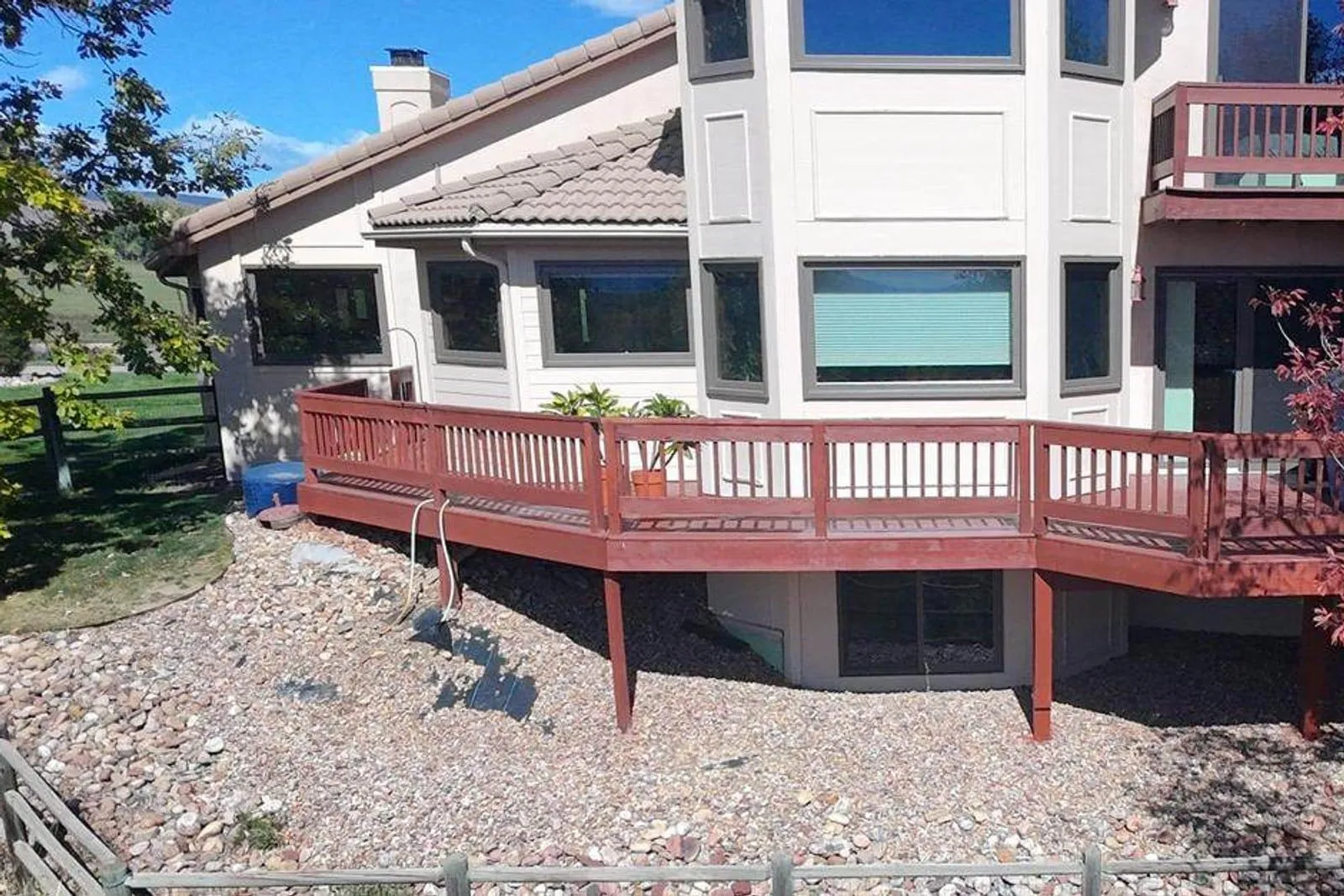
Why does composite decking last longer in Colorado?
Colorado decks face strong sun, snow, and fast temperature swings. Composite handles these conditions better than unprotected wood:
Intense UV at altitude: UV levels rise about 10% with every 1,000 meters of elevation, according to the World Health Organization, and Front Range homes sit about a mile up. The cap helps resist the fading that turns wood gray.
Snow and moisture: composite resists rot and does not need sealing to keep water out.
Aging and splinters: composite boards do not splinter the way weathered wood does.
Rot and insects: in a 17-year USDA Forest Service field study, composite samples outlasted untreated wood, which failed within two years in ground contact.
The structure still matters. Pair composite boards with galvanized steel or TimberTech aluminum framing so the frame lasts as long as the surface, and see how long a custom deck lasts in Colorado.
What are the limitations of composite decking?
No material is perfect. Knowing the trade-offs helps you choose well:
Heat: all decking gets hot in direct sun, and darker colors feel hotter; TimberTech suggests lighter colors for hot exposures.
Expansion and contraction: boards move with temperature, so installers follow specific gapping rules.
Upfront cost: composite usually costs more than wood at first; see the custom deck cost guide.
Not maintenance-free: it still needs periodic cleaning, especially in summer heat.
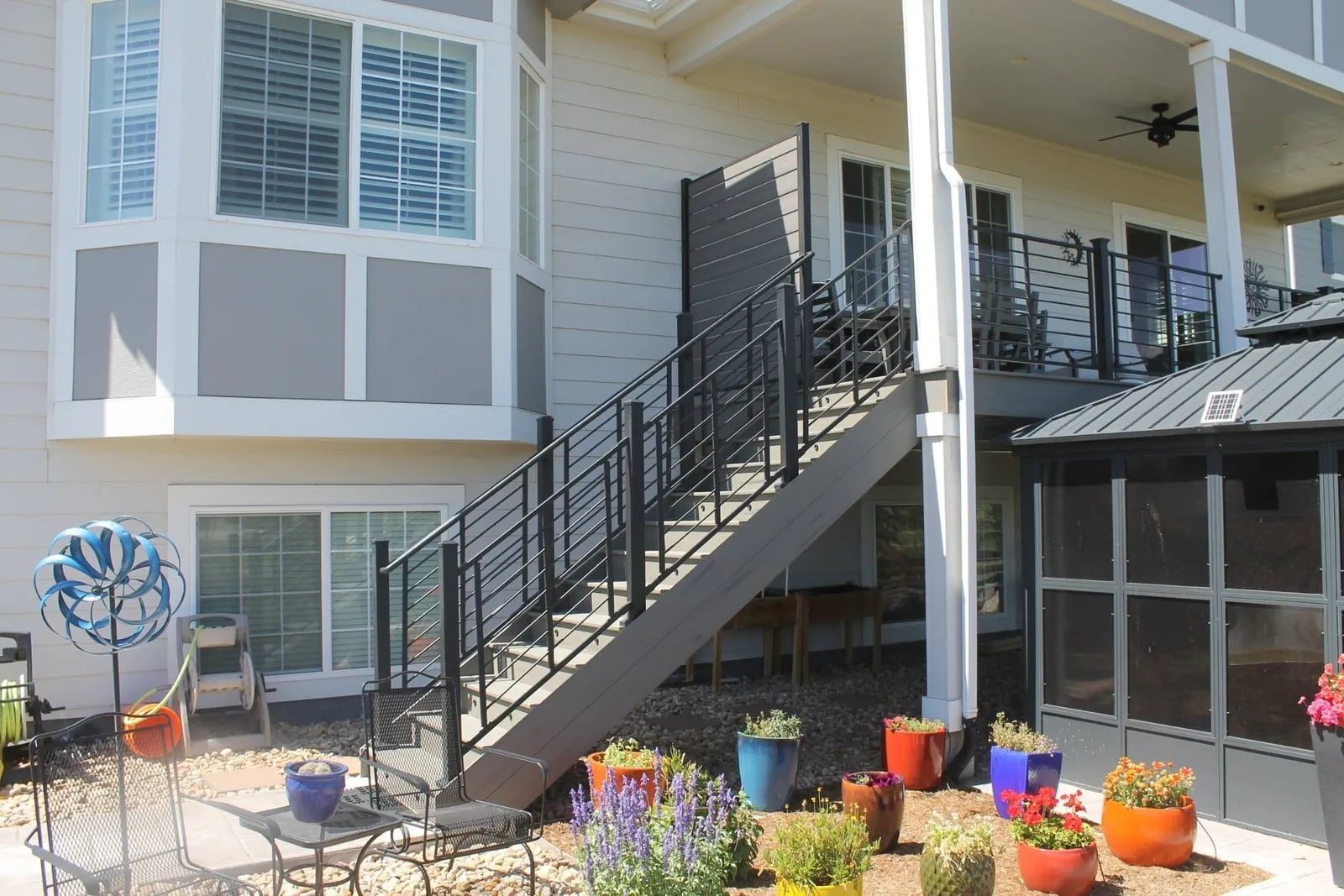
How to keep a composite deck performing
Clean the surface with products safe for composite a few times a year.
Keep board gaps and drainage paths clear of debris.
Remove snow carefully, following these winter deck care tips.
Inspect railings, stairs, and connections each season.
Thinking about a composite deck in Colorado?
Explore Decks by Caio’s TimberTech deck options and custom deck solutions, then request a free estimate for your home.
Composite decking FAQ
What is composite decking made of?
Composite decking has a core of wood fibers and plastic, usually protected by a polymer cap. According to TimberTech, its composite boards can contain up to 85% recycled content.
How long does composite decking last in Colorado?
Composite decking commonly performs for 25 to 30 years, and TimberTech backs its composite collections with 25- to 30-year limited warranties. Installation, framing, and care affect the real lifespan.
Is composite decking better than wood in Colorado?
For homeowners who want low maintenance, often yes: composite resists rot, fading, and splintering in Colorado’s sun and snow. Wood costs less upfront but needs regular sealing or staining.
Does composite decking get hot in the sun?
Yes. All decking gets hot in direct sun, and darker colors feel hotter. Choosing a lighter color helps on decks with strong afternoon sun.
 Call us (303) 808-2988